Monday, March 25, 2024

Interviewed by Today Online: What do water filtration devices do; are they necessary given the quality of Singapore’s tap water?

 You may find the article here (Today Online 25 Mar 2024).


Obviously, my views were not fully captured in the article for which I do understand why. For those interested, I have reproduced the entirety of my responses below.


PUB has stated that tap water in Singapore is safe for drinking and that there is no need for such filtration systems. Can you explain why this is so and what makes the water in Singapore safe for drinking? 

PUB has been following the WHO Guidelines for Drinking Water for a long time and in fact has modified and improved on some of them to come up with its own EPH regulations. The water output from every water treatment plant in Singapore must comply with these guidelines and regulations. These guidelines and regulations cover the limits in concentration that microbes, chemical substances and radiological parameters can have in tap water.


What do water filtration systems actually do? Are the claims commonly made by water filtration devices actually true?

There are many types of filtration systems out there. In a nutshell, they remove contaminants from water using various methods e.g. distillation, reverse osmosis, microfiltration. (Some methods are not technically filtration but I shall continue to use the term “filtration” to refer to them.) They are in contrast to systems that add substances into the water e.g. hydrogen water, alkaline water. Obviously, there are systems that both remove and add substances into water e.g. alkaline water systems typically incorporate filtration components to remove solids and other stuff in water.


There are as many claims as brands in the market. By and large, the claims by reputable brands are genuine. However, whether those claims are useful to the consumer can be debatable. E.g. a filter that claims to remove lead from water is probably redundant in Singapore as the levels of lead in our tap water are really low.


What do such devices do, in terms of taste, health and safety of the water that it filters? How did such devices gain popularity in Singapore?

I notice that in the past decade of so, people have become more informed of issues relating to health. A lot of times, we find out about such issues from other developed countries. In Singapore, the concerns are predominantly about lead, asbestos, chlorine and fluoride in tap water. Though we hardly can find piping and fixtures containing lead or asbestos in Singapore, chlorine and fluoride are still intentionally added into our tap water a the water treatment plant for their benefits. There are concerns about their adverse effects on human health in several developed countries. Not surprisingly, some people want filtration systems to remove them from their tap water.


I believe the popularity of these devices in Singapore also have a lot to do with systems that add substances into water e.g. alkaline. This is probably due to their claims of being beneficial to human health


What is your response to advertisements, such as that by water filtration companies <<deleted>> that alkaline or filtered water can help prevent health conditions such as osteoporosis, acid reflux, blood pressure conditions and diabetes or that tap water can contain harmful micro-organisms that need to be filtered out? Are any of these claims true?

My take on the health claims of alkaline water and hydrogen water is there is limited scientific data to support such claims. Most of the studies involve rather small sample sizes. The physiological mechanisms that promote the purported health benefits are typically not well established. I am not disputing their health benefits per se. Rather, I would like to see better quality scientific data behind these claims.


As for microbes in water, a well designed and built filter can indeed remove them effectively. The question is whether pathogenic microbes are even present in our tap water. Short of uncommon occurrences e.g. poorly maintained water tanks or downright rare events e.g. dead domestic worker in the water tank, I don’t expect pathogens to be found in tap water.


How does Singapore differ from other countries in terms of the need for such water filtration systems? In what contexts would such systems be more beneficial? For example, I understand that water filtering devices have proven useful in disaster stricken or rural communities elsewhere.

Your examples of filtration being used in disasters and rural communities are spot on. Therefore, I believe the need for filtration devices in Singapore households is quite limited. (Industries are a different story.) These are the niches that come to mind.

    1. Immunocompromised individuals who cannot tolerate an excess of certain substances in water
    2. Coffee and tea aficionados who need pure water for the best taste in their beverages
    3. Individuals who are convinced that to maintain good health, they need water to be free of chlorine and/or fluoride. Or they need alkaline water etc. For its purported health benefits. I believe that they have the right to use such devices regardless of whether the benefits are physiological or psychological.


How can consumers sort between any real benefits and untrue claims, and make a safe and informed decision about the products they purchase/the water they drink? Do you recommend the purchase of any such products to filter drinking water?

I do not believe there is a need for such products in a Singaporean household unless the above exceptions apply. Even then, I feel that choosing the right filter is not simple as the consumer has to know what polluting substance he is trying to remove from the water? (I shall not touch on the addition of substances here.) What concentration is that polluting substance at?  Is said substance even a concern? Can the device effectively remove the substance? Obviously, there are also considerations involving budget, maintenance frequency and long term costs.


One pretty reliable certification of filtration devices is the NSF/ANSI series of certification. Even then, the consumer still has to be rather savvy to understand if the particular NSF/ANSI certification applies to him. E.g. a filter certified for removal of lead only is not useful if the consumer is concerned about fluoride in water. Furthermore, the certification is based on a standardised laboratory test for a certain concentration of a substance, say lead. If the level of lead in the consumer’s tap water is different, the performance will not be the same as certified.


Feel free to share any additional thoughts or information you might have on the topic!

Lastly, the WHO Guidelines are not omnipotent. They are set up based on limitations and compromises so conforming to them does not absolutely prove that the water is safe.


As the guidelines are designed to be economically feasible for worldwide use, they do not address some emerging concerns in drinking water e.g. pharmaceuticals, hormones, microplastics.


Figure: A water filtration unit used by Red Cross in its disaster relief operations


Tuesday, November 07, 2023

Concerns about DPG (diphenyl guanidine) by-product in drinking water

 Dear Mr Chen Ko,

I am a fan of reading your blog posts.  Thank you for doing such a great public service for sharing your knowledge.

I have a question.  Recently there is a Straits Times report about possible DPG-chlorine by-product in tap water:

https://www.straitstimes.com/singapore/local-scientists-studying-chemical-in-tap-water-to-determine-if-harmful-to-human-health

I am using a Berkey filtration system.  Do you know if a Berkey is able to filter out this DPG-chlorine by-product?  If not, are there any home based filtration system that can do that?

Thank you very much for your advice.

HA


Dear HA

Thanks for sharing the Straits Times article.

Here are my thoughts regarding the issue.

  1. The first thing that struck me when reading the article was that the chemical substance in question, a by-product of the reaction between DPG and chlorine, was not identified. This is strange and I seriously cannot fathom why PUB did not release it (and ST not pursuing its identity).
     
  2. In case you have not read the article, DPG is found in rubber products, including the rubber gaskets and seals used in our water distribution system. The article maintains that DPG can leach into our drinking water as water is conveyed from the water treatment plant to our homes.

  3. As for chlorine, it is intentionally added into our drinking water for disinfection purposes at the water treatment plant. Apparently, chlorine and DPG can react in the water distribution system to form the unnamed by-product of potential concern.

  4. The concern about chlorine and its by-products in drinking water has been raised for many years worldwide. Its continued use in municipal drinking water has always been justified by its benefits (keeping the water germ free) against its potential hazards. This is perhaps why the WHO limit for chlorine in drinking water is given at an amazingly high value of 5ppm (parts per million). Apparently, this value was chosen to avoid giving rise to water that tastes like the swimming pool, rather than to prevent any specific detriment to health.

  5. DPG and its by-product are new to the drinking water scene. Their health effects and safety levels in drinking water are far from established. To me, this is shaky ground to justify for home water treatment as the facts are not strong to make a decision.

  6. Nevertheless, I believe that the consumer is entitled to achieving peace of mind by trying to eliminate these substances in drinking water. With little data on the actual concentrations in tap water and probably zero data on any home water treatment device successfully removing them, I am going on a leap of faith to say that the best bet to remove them at home is a reverse osmosis (RO) unit. If you are concerned enough about your health to ask questions about DPG & its by-product, you are probably willing to spend some money to get a unit from a reputable supplier.
     
  7. Interestingly, the news article mentioned that PUB's water treatment plants manage to remove these substances. RO is routinely used in its water treatment plants so that is perhaps a step in the right direction for home treatment.
Good luck!


https://www.residencestyle.com/wp-content/uploads/2019/03/Reverse-Osmosis.jpg 

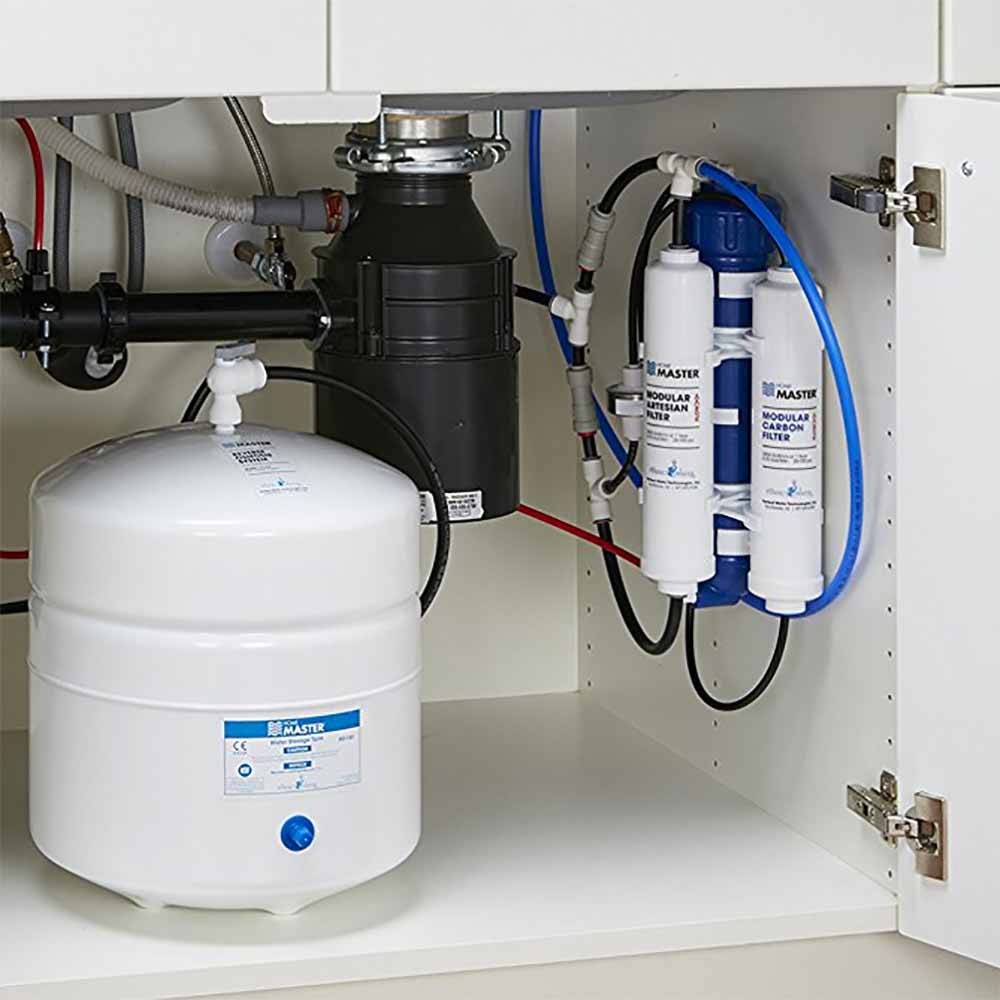
Figure: A typical under-the-sink reverse osmosis (RO) unit


Thursday, September 21, 2023

Descaling for home appliances?

 Also, what are the consequences if we don't descale - the iron, airpot works fine. 

For Nespresso, I read that they will take longer to heat or water will be cold, coffee will be bitter. 

They still heat up. 

How do I know if the 1) to 3 items need descaling?  

Thanks again. 


Thank you Mr Chen Ko for your thorough water blog. 


Hope you can advise me if the following needs regular descaling if used in Singapore with its soft water:

1) Iron with water container, 

2) Thermal air pot or  kettle 

3) Nesppresso?


So far we have not descale any of our electric water containers. 

At most, I  see the ageing water heating rod turned orange in our kettle.  

Thank you for your kind sharing. 


kim


Dear Kim

Here are a few thoughts regarding the issue.

  1. Hardness in water is due mainly to calcium and magnesium initially dissolved in water. Due to heating, these calcium & magnesium react chemically with other substances in water to form your solid scale.

  2. Toxicity of scale is not an issue so we can leave that out of the equation.

  3. However, scale does adversely affect heat transfer in heating equipment so a thick layer of scale means that you need more power to heat up the same amount of water or beverage. In industry, it is a standard practice to descale large-scale heating equipment to minimise heating costs. For domestic purposes though, I hardly hear of such a practice as the economics probably do not work out favourably. Your equipment probably fails before the scaling becomes problematic.

  4. As you rightly pointed out, the water in SG tap water is soft so the scaling problem is somewhat less severe than in other countries consuming hard water in their homes.

  5. Though scale is somewhat stable normally, it can break up and dissolve in an acidic environment. Incidentally this is one way to perform descaling. You mention about coffee so yes, if your coffee has the right level of acidity (this applies to tea too), the scale can dissolve into your beverage and most likely affect its taste.

  6. Long story short, if you believe the scale is affecting the taste of your normally superb coffee/tea, go ahead with descaling. However, I am unsure of the economics of such a move compared to simply getting a new machine.

Good luck!

Figure: Nespresso machine


Friday, August 04, 2023

The History of Water Quality in Singapore: Talking about Science from a Historical Perspective (or is it History from a Scientific Perspective)

[Appended in March 2024: The experience in 2023 had been so positive that I returned in March 2024 to give another round of training to the latest batch of docents of the National Museum of Singapore. The session was conducted more like a discussion rather than a lecture. This is one of my preferred modes of "training" for adult learners.]


I recently (March 2023) had the privilege to be invited to provide a training session to the docents of the National Museum of Singapore. The topic was on the history of water quality in Singapore. Admittedly, history has never been my forte since my secondary school days. In fact, I used to thumb my nose at the subject. However, water quality is and it has always been my pleasure to share about this topic with all manner of audience and even from a historical perspective.

Talk at National Museum of Singapore - The History of Water Quality Click here for the full video of the talk.

Docent training at National Museum of Singapore: The history of water quality in Singapore
Click here for the full write-up of the talk.


Wednesday, March 01, 2023

Being Interviewed on Talking Point shown on Channel 5, Nov 2022: Is Bottled Water Worth Your Money?

Despite the title of this episode as given above, I was not sought for my views on bottled water. Instead, I gave my take on alkaline water which appeared in a segment in the middle of the show. In a nutshell, my stand has been consistent with what I have been saying on this blog all this while. (Check out an earlier post for a more in-depth discussion: Why I wouldn't be drinking alkaline (aka ionised) water.) There is much well deserved skepticism regarding alkaline water. Until these issues are cleared up, the claims regarding alkaline water continue to sound nebulous.


Wednesday, August 31, 2022

 Hi Mr Chen

I saw your blog after researching on hard water in Singapore.  I also read your reply a few years back on hard water.

 I just want to share that i just moved to a new flat and the water is indeed hard. My kettle, sink, shower glass and toilet bowl are all impacted. They come back in 2 days.

 While i have asked PUB to do a water test, my suspicions is that they will tell me "it's within safety standards".

 But i am concerned about impact to appliances, pipes and taps, not to mention the constant need to remove deposits.

 In my FB post to a group, it seems like west area has this issue, though mine is central area and my flat is built in 2006. 

 Anyway, i just want to 

 1. share with you that there's hard water in SG.  

 2. Get your advise if i should get a ion exchange filter.

 Thanks+

BT


Hi BT,


Here are my thoughts.


You are refer to the latest copy of PUB's Water Quality Report here.  First, hardness is not a safety concern in drinking water. Therefore, there is no WHO guideline or EPH (Environmental Public Health) regulation for it. Technically, PUB does not even have to test for hardness in your water sample. In the report, total hardness was assigned an average of 39mg/L and a range of 19-157mg/L. As mentioned before in this blog, there is no mention in the report of when, where and frequency of sampling with regards to these figures so do take them with a wide, open mind. Another obvious point is the deviation of total hardness from its average value seems rather broad so your tap water can still fall within the range near the upper limit and it is still acceptable.


 In countries like USA where hard water is often encountered, house owners install POE (point-of-entry) filters to remove hardness at the point at which water enters the house. (As you rightly commented, these are often based on ion exchange.) Hence, all fixtures in the house will not be exposed to hard water. This may be impractical in a SG flat due to cost and space. In fact, I have not heard of any residence here installing a POE filtration system.


The alternative is a POU (point-of-use) filter that is typically connected to the tap where you obtain your drinking water. Of course, this does not address the issue of your piping and fixtures being exposed to hard water. Also, as mentioned before in this blog, unless you are particular about the taste of your beverages (coffee, tea etc.), a POU filter is redundant. (Commercial coffee joints do install these as the quality of their beverages is important to them and their customers.) 


Lastly, you may want to test your water just to be sure that it is indeed hard. Either purchase a DIY kit or send a water sample to a commercial testing lab. The DIY kit should be cheaper if you are testing for a single water quality parameter. If you are opting to test for a package of various water quality parameters, the commercial lab should prove to be more competitive.


 Good luck!

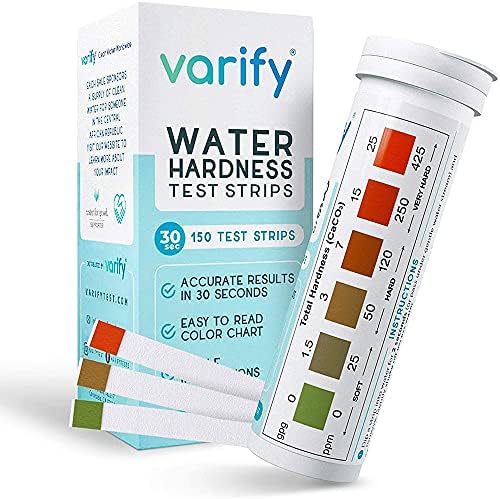
Premium Water Hardness Test Kit | Fast and Accurate Hard Water Quality  Testing Strips for Water Softener Dishwasher Well Spa Pool, etc. | 0-425  ppm | Calcium and Magnesium Total Hardness (150 Strips) : Amazon.sg: Garden 

Figure: A simple DIY water hardness test kit on Amazon (No, I am not an affiliate.) 

Monday, May 31, 2021

Removing fluoride and chlorine from tap water

After my interview by CNA, some questions came in about the removal of chlorine and fluoride from tap water. 


Unlike other substances in tap water, chlorine and fluoride are added into tap water by the water treatment process. Chlorine is supposed to keep water free of pathogens as the water is conveyed from the water treatment through kilometres of piping (with many other equipment in between) to your home. On the other hand, fluoride is supposed to maintain dental health as the locals here tend to have tooth decay issues in the years after independence. I have written about chlorine and fluoride previously - fluoride & other contaminants in beer, Do we really need water filters?, Evaluating the necessity and usefulness of water filters for domestic tap water, Advice on water filtration in Singapore: alumina, boiling, gravity fed vs. counter-top.


 In recent years, much health concerns have been raised about these 2 additives in our drinking water. Are they safe at the concentrations in tap water? Are they even necessary? As with a lot of health issues, there are arguments on both sides. A lot of times, it comes down to the consumer to decide on getting a water filtration system to remove them for good, old peace of mind. To me, this is perfectly fine as I can attest to the importance of peace of mind from personal experience. What I do have issue with is the selection of an effective water filtration system (aka water filter), if one even exists.

3 points to consider in selecting a water filter

Those who have watched my interview with CNA (CNA has somehow left out these 3 points in their print version) should recall that I have expressed 3 factors to consider in getting a water filter.
  1. Know what you want to remove (or add) from your water.
  2. Find a water filter certified to remove those contaminants
  3. Make sure you can spare the time and money for maintenance

A more comprehensive guide can be found in my article - 3 Critical Questions to Choosing Your Water Filter which can be downloaded for free.

Which water filter can remove chlorine and fluoride then?

Some readers have mentioned their confusion by the vast assortment of water filters in the market. Without going into laborious scientific research, are there any water filters that I can recommend to remove chlorine and fluoride? 


In general, most brands of water filters do not show certification from a reputable source e.g. NSF/ANSI. Furthermore, they do not display evidence of extensive testing of their filters either. Most claims to remove this contaminant and that pollutant are just that - claims.

Naturally, quite a few brands have slick marketing campaigns and impressive designs. In fact, their designs can actually be aesthetically pleasant and functional in piping tap water under the sink to a sleek looking but unobtrusive faucet on the tabletop. However, the question still remains - can the filter perform the job you want it to - removing chlorine and fluoride from tap water? In the majority of cases, I am not confident enough to say they are capable of it.

But I still want a water filter for peace of mind

Yes, I understand the importance of peace of mind so I shall make a recommendation here. 


I strongly suggest getting a Big Berkey fitted with their Black Berkey filter elements + fluoride reduction attachments. (No links provided here. I am sure you can find it easily on the Internet.) Though not actually certified by NSF/ANSI, their filters are extensively tested under NSF/ANSI standards and the detailed results with testing protocols are published on their website. That is a lot more than what the majority of brands can provide to the consumer.


Nevertheless, a caveat is in order - NSF/ANSI standards are not exactly Singapore tap water standards. The most obvious difference is Singapore's tap water has chlorine and fluoride in much lower concentrations. How much can a filter further reduce their concentrations? We did tests on certain water filters in the past and the reduction is in general not fantastic. And unfortunately, Singapore is too small a market for anyone to actually conduct testing of water filters for their effectiveness in treating Singapore tap water.


With that in mind, dear consumer, go ahead and choose your water filter!

Figure: Big Berkey replacement filter elements