Showing posts with label bottled water. Show all posts

Sunday, February 17, 2019

Water quality standards for bottled water?


Dear Chen Ko,


I am Bob searching for information about safe drinking water qualities from internet.

The web  bring me to your blog and found that you are knowledgeable about drinking water.


I am writing to ask you about safe drinking water qualities from bottled water dispenser.

Please look at the 2 photos carefully. This water dispenser is located in our working office.

Can you please advise what are the safe allowable TDS, pH values and other controlled parameters

for this bottled water dispenser as regulated locally or by international association?


Thank you for your helps.


Best regards,
Bob


Hi Bob,

I must confess that bottled water is not my favourite type of drinking water. Overall expensive and water of questionable quality, this is not my first choice for the office. If you absolutely need a hot/cold water dispenser, one incorporating reliable water filtration of tap water will be more economical. Singapore tap water is already quite good to start. Add in a good water filtration system and it should satisfy most people who have concerns about drinking tap water. And you do not need to call the vendor regular to resupply the bottles. Just change the water filters as instructed and all should be fine.

But back to your questions... TDS (total dissolved solids) and pH are not contaminants by themselves so these 2 parameters are not within WHO drinking water guidelines. (pH is regulated by PUB though for other reasons rather than water safety.)

In Singapore, bottled water is regulated by AVA, not PUB. (See previous post for a more comprehensive view of bottled water regulation in the world.) You can find the list of water quality parameters and requirements under AVA here. If you bother to count, the number of parameters comes up to about 30, a far cry from the ~ 200 within WHO drinking water guidelines. This essentially means that bottled water is much less tightly regulated in SG compared to tap water.

Don't get me wrong, bottled water does have its place in supplying drinking water. Especially in the early phase of an emergency/disaster, it is invaluable in providing drinking water for the beneficiaries affected by the emergency/disaster. Of course, they have little choice in the matter. If you have other choices for your drinking water, bottled water should not be the first.

Figure: A typical hot/cold/warm water dispenser linked to the water mains and incorporating water filtration

Friday, July 07, 2017

Slides from Talk at Bishan Public Library: Finding safe drinking water overseas

About a month back, I gave a talk at Bishan Public Library on Finding Safe Drinking Water Overseas. The turnout was encouraging and the audience asked several useful questions. It was heartening to know that we do have people concerned about water quality in our midst.


Anyway, there had been requests for me to release my slides for public consumption so here they are. If somehow, you have missed the talk or you happened to be there but would like to recheck some parts of the talk, click on this link. (You will need to opt in though, even if you had joined the mailing list previously.)


Figure: Thanks to Victor for taking this photo of me during the talk


Friday, May 05, 2017

Talk at Bishan Public Library: Finding safe drinking water overseas

The link is now ready! Please click on "Register here!" above to register.
You are required to key in your NRIC. Due to a bug in NLB's system, you can't enter alphabets even though the NRIC field requires 9 letters. Therefore, you can add any 2 extra digits as a walk-around to the bug.

Wednesday, July 20, 2016

Certification of bottled water?

In a previous post, I replied to a reader on bottled water. I thought I should write a bit more about this topic of bottled water here.


Bottled water is probably worse than drinking water in terms of the bewildering plethora of regulations and certifications. To streamline this discussion a bit (and also to keep this post readably short), I will just touch on some of the major ones.


International Bottled Water Association (IBWA) (based in USA)
Bottled water companies can pay to become its members. It has a documented code of practice here. However, members have the discretion to follow (or not to follow) the code.


The document includes guidelines for operating a bottling plant, water quality parameters to test for in both source and finished water.


It also has definitions for the different types of bottled water. Other regulatory organisations have roughly similar definitions. If you thought bottled water is simply water, check out the following xxx water.


  1. "Artesian Water" or “Artesian Well Water” means bottled water from a well tapping a
    confined aquifer in which the water level stands at some height above the top of the aquifer.
     
  2. "Demineralized Water" means bottled water which is produced by distillation, deionization,reverse osmosis, or other suitable process and that meets the definition of purified water.


  3. "Deionized Water" means water that has been produced by a process of deionization and that meets the definition of "purified water"


  4. "Distilled Water" means water which has been produced by a process of distillation and
     
     
    meets the definition of "purified water"
     
  5. "Mineral Water" means water containing not less than 250 parts per million (ppm) total dissolved solids (TDS), coming from a source tapped at one or more boreholes or springs,
    originating from a geologically and physically protected underground water source.
     
  6. "Natural Water" means bottled spring water, mineral water, artesian water, artesian wellwater, or well water which is derived from an underground formation or water from surface
    water that only requires minimal processing
     
  7. "Spring Water" means water derived from an underground formation from which water flows naturally to the surface of the earth.
     
USA Food and Drug Administration (FDA)
 
In USA, bottled water is tightly regulated by FDA. Note that tap water in USA is regulated by EPA instead.
 
Some interesting points:
 
  1. "FDA monitors and inspects bottled water products and processing plants under its general food safety program, not a specific bottled water program.
  2. As with other types of food, FDA periodically collects and analyzes samples of bottled water.
  3. FDA laboratories may test the water for microbiological, radiological or chemical contamination. Individual samples are not tested for all possible contaminants cited in the quality standard, but for selected contaminants, depending on the reason for the sampling.
  4. Bottled water is considered to have an indefinite safety shelf life if it is produced in accordance with CGMP and quality standard regulations and is stored in an unopened, properly sealed container. Therefore, FDA does not require an expiration date for bottled water. However, long-term storage of bottled water may result in aesthetic defects, such as off-odor and taste. Bottlers may voluntarily put expiration dates on their labels.
  5. The materials used to produce plastic containers for bottled water are regulated by the FDA as food contact substances. Food contact substances must be approved under FDA's food additive regulations."
EU's European Federation of Bottled Waters (EFBW)
 
All bottled waters are strictly regulated under EU law.

Of particular interest is Directive 98/83/EC on the quality of water intended for human consumption. Like other regulatory documents, it lists down quality standards (these as usual include chemical, microbiological and radiological parameters), sampling and monitoring.


National Sanitation Foundation (NSF) (based in USA)


As seen above, FDA and EFBW are legislative and regulatory in nature while IBWA is more about self-regulation/compliance. Guess what, NSF is really about certification!

Its certification process seems quite comprehensive
  • HACCP (hazard analysis and critical control point) and ingredient review
  • Facility audit
  • Product testing
    • The client get to choose which regulations to test against e.g. FDA, EU, WHO
  • Source water testing
  • Label review
  • Recertification
    • Done yearly via an unannounced audit and product testing
Bottled water supplies certified as such will get to stick the NSF logo on their products and have their company names listed in the NSF database.
NSF
In case you are thinking to rushing to click the above database link to see whether your favourite bottled water is listed there and if you are staying in Singapore (SG), I think you may be disappointed. Hardly any of our local bottled water suppliers are shown. In fact, the only NSF certified bottled water I found (though there may be others I am not aware of) is Icelandic Glacial Natural Spring Water retailed by Watsons. (No, of course I am not promoting or endorsing the drink. I am simply using it as an example.)

Personally, I believe NSF certification is a great step forward for a bottled water. IT definitely endows more confidence to the consumer on the safety of the product.
Finally, what about SG itself?

When I did a quick scan of the bottled water around me, it seems most of them come from Malaysia and Indonesia unless you have the cash to spare and buy brands imported from Europe. Quite a few large companies have bottled water labelled with their companies' logos and names and those are typically from our 2 neighbouring countries.

Before you suspect the safety and quality of these uncertified products, understand that all bottled water in SG are regulated under AVA.

Referring to AVA's document, many documents have to be submitted to AVA e.g. site plan of the water source, factory licence, authentication certificate for import of bottled water. Every consignment has to be accompanied by a health certificate that includes the concentrations of various water quality parameters (microbiological and chemical, no radiological though).

In addition, "meeting the import requirements does not exempt the imported consignments from inspection and sampling for laboratory tests by AVA"


My take
Unlike water filters, bottled water (even more for tap water) is pretty regulated in terms of legislation. Still, compare AVA's bottled water requirements of about 30 water quality parameters to WHO's ~200 parameters for drinking water or PUB's similarly numerous parameters for tap water and you get the idea that bottled water is lagging behind in its stringency... unless a bottled water supplier is willing to get NSF certification based on WHO drinking water standards.

So buyers take note, bottled water is not necessarily safer than tap water.

Saturday, July 16, 2016

Bottled water vs. tap water


Dear Mr Chen Ko,


I read some of your blogs and would appreciate your advice. As I understand a minute amount of NEwater is added into the reservoirs and then subsequently makes its way into our tap water through the normal processes. 


While the amount of NEwater is small, I am now thinking of using bottled water for my family. I have been searching through and I can't find any company that provides distilled water made from mineral water. They all seem to state that their distilled water is from the local water supply.


If one was to buy mineral water, would that be good for the body in the long run? Or do you have any suggestions on other types of water to consume, such as spring water and etc.


Your earliest reply is appreciated.


Shabbir


Dear Shabbir,

  1. For those outside of Singapore (SG), Newater is our national brand of water further reclaimed from the effluent of wastewater treatment plant (euphemistically named water reclamation plant (WRP)). Our local and only water utility company, PUB, has been adding Newater in small amounts into our reservoirs. The combined water is subsequently sent for water treatment before ending up in our taps.

    Just wondering, do you have any particular concerns with regards to this practice? I am neither pro- nor anti-PUB but I fail to see any problems arising due to this. Water is water and with the proper treatment, any contaminant can be removed or at least reduced to below detection limits.

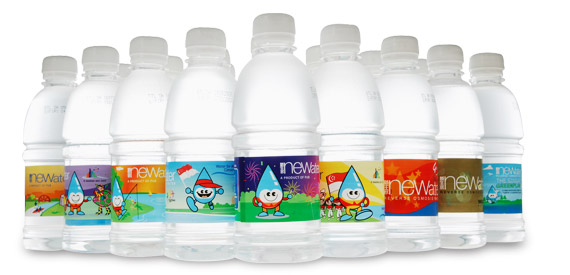
    Figure: Newater


  2. A couple of thoughts about bottled water
    1. It is expensive! Easily the most expensive form of water vs. tap and filtered water. If I have the money to go long term on bottled water, I will probably use an alternative source of water and use the leftover money for something else :-)
    2. The plastic itself lends to waste. Though recyclable, I would rather not use it in the first place.
    3. Certain bottled are treated (filtered or otherwise) tap water. In the case of bottled distilled water, the treatment includes a distillation step.
    4. Depending on how clean the treatment and bottling setup is, bottled water can already be contaminated with fecal matter, bacteria, solvents etc. despite its beautiful packaging.
    5. Even so called "mineral water" are often produced by adding chemicals (aka minerals) into treated water. Only in certain cases are the water really obtained from real mineral water from the ground.

      Figure: bottled water

  3. As for distilled water
    1. It is similar to RO (reverse osmosis) water, demineralised water (possibly by ion exchange) and Newater in the sense that it has little constituents i.e. as close to pure water as you can get.
    2. Therefore, it does not make sense to produce distilled water from mineral water. All the minerals would have been stripped, rendering the perceived advantages of mineral water moot.
    3. Water, whether distilled, demineralised or RO, is "aggressive". It has so little constituents that it becomes reactive.
      1. There had been claims that it can leach minerals and nutrients from your body. However, there are studies that have refuted otherwise so I personally think that this issue is inconclusive.
      2. Of greater concern is such aggressive waters can attack (read corrode) the distribution network, leaching chemicals from piping and fixtures. How would you like to have your coffee laced with lead and copper?
      3. And don't forget how you store your water. If your storage container is not inert like glass, the same aggressive water can also leach out chemicals from your favourite plastic jug.
      4. Others claim that these "pure" waters are doing a disservice to your body since they are not providing the minerals your body needs. My take is I drink water because I need water. The minerals I need are more effectively obtained from my food or possibly supplements. (Again some studies have shown that minerals e.g. calcium, magnesium can indeed be obtained from your drinking water which I believe. But why bank on your water for a small amount of these nutrients when you should focus on getting a balanced diet?)
  4. In answer to your question: No, I don't believe mineral water (in the form of bottled water) is a long term solution to your water needs because of the reasons given above. In an emergency or short term usage (e.g. 2-week community service in a developing country), bottled water has its place but no more than that.

    I still maintain my stand that our (SG) tap water is good enough to consume unless you have specific concerns, perhaps due to certain health condition or maybe your particular belief in the properties of our tap water. In that case, I recommend that you pinpoint that concern and address it via a suitable treatment method which can be superior to whatever treatment used in bottled water.

Friday, September 10, 2010

Introducing the British Berkefeld filter - something you can count on when the chips are down

The latest earthquake in New Zealand (Christchurch and surrounding area, 4 Sep 2010, 4:35a.m. Saturday, 7.1 magnitude) got me thinking about the supply of water again but this time round it prompted me to pen it down. (Long post as follows)

If you have been following this year's (2010) natural disasters - earthquakes in Haiti, Chile; flood in Pakistan, public water supply has always been a fragile creature. Infrastructure can be destroyed, piping and storage tanks can be broken.

In Pakistan, the deluge caused natural sources of water (e.g. wells, springs, streams) to be contaminated with whatever the flood water carried - human and animal waste, pathogens from corpses and carcasses, pesticides from farms, heavy metals from industry. In the short term though, it was the water borne diseases that caused the most problems - diarrhea, dysentry, cholera, typhoid etc. The breakdown of sanitation and water supply led to a nightmare for public health (probably nowhere near top notch even before the flood).

Bottled water naturally became a valuable commoditity as seen in Chile when it became one of the top looted items (together with bread and candles). I imagine the same would have occurred in Haiti if there was enough bottled water to go around to be looted.

Being a developed country, New Zealand was spared from serious looting (some still took place according to the news) or outbreaks of water borne diseases. Heck, no one was killed by the quake as according to some experts, the strict building codes to quake-proof its structures have helped. (Compare against 230 000 killed in the Haiti quake.) Nevertheless, the sewage pipes were broken in the quake, allowing sewage to mix into the drinking water supply which probably probably suffered from broken piping too.

Consequently, residents in affected areas were asked to boil their tap water for drinking. I am thinking: these people are lucky (despite the quake and all). They still have electricity or/and gas. Imagine... if you have no gas, no electricity and only sewage infused tap water, how are you going to boil your water?

Imagine some more.... the NZ scenario (without the gas and electricity) happens right here in good old SG (assuming we survive the quake), do you have a wood burning stove and charcoal at home? How about a camp stove with extra gas tanks? The lucky ones will be those NOT using piped gas. The years of effort to heft around those gas cylinders would have been worth it.

Do you have Aquatabs on hand? Bleach? Do you know how much to add into water? Personally, these are not my favourite choices because of strong chlorine taste and many health controversies of overchlorination. By the way, if you opt for bleach, only use the straight ones without extra ingredients e.g. scent.

Boiling is good if you can do it but it only removes the bugs and not all the other nasty stuff (pesticides, metals) in the water. Imagine having a Pakistani scenario here. I will boil my water before running it through a good filter.

I personally recommend the British Berkefeld (or Doulton) gravity filter. (In America, it is sold under the name of Berkey.) No water pressure, no electricity needed. Simply pour your water through the top and collect clean water at the bottom. The key element in the setup is the filter candle with the ATC SuperSterasyl being the best. It has a ceramic outer shell impregnated with silver. The ceramic physically remove microbes and particulate matter from the water while the silver suppresses bacterial growth. The water next enters a granular activated carbon core containing a metal ion removal medium (works by ion exchange, I believe) to eliminate many organic compounds (e.g. pesticides), chlorine and metals (e.g. lead, cadmium).

Figure: The external setup of the British Berkefeld stainless steel gravity filter minus the faucet which should be attached near the bottom. It is certainly not small (this is already the smallest stainless steel model) so it should be used for the family or small group at a static location.


Figure: Opening the lid reveals 3 holes for fixing a filter candle each


Figure: The heart of the filter system - ATC SuperSterasyl filter candle. Notice the white ceramic exterior. Water enters through the ceramic and filtered water leaves through the black nozzle on the right.


Figure: The top portion is removable for fixing the filter candles. Filtered water goes into the bottom portion for dispensing via a faucet.

Having one of these filters will certainly add a great degree of water security to any family. And if you are involved in overseas community projects, keeping one with you serves as insurance, especially if you are not sure of the water quality or source of your drinking water.

This line of filters may be procured locally from Arkwater. Of course, I am in no way affiliated with the company except for purchasing these filters from them.

Tuesday, March 02, 2010

Dear, we have run out of water from the tap. Can you head to the nearest supermarket and loot some? (Earthquake in Chile)

Different country but same story and ramifications.

Chile was hit by a magnitude 8.8 earthquake on 27 Feb 10, killing at least 700 people by last count. As always, the quest for survival has only started for the survivors. Public utilities like water, gas, electricity and telephone are down. Police presence is barely felt but sorely needed as some parts of the country turn into a looters' paradise.

Imagine a densely populated city like Concepcion (the hardest hit major city) and take away all public utilities. You now have a recipe for social chaos. People become desperate when no water comes out of the tap, the food stalls and supermarkets are closed, no lights to reassure the soul at night, transportation is dysfunctional.... When children get cranky from hunger and thirst, parents are invariably driven nuts.

Cops also face the same challenges and need to take care of their families. It will be lucky if half the police force turns up for work.

Not surprisingly, looting starts and spreads. And the number one items looters look for - water (bottled, packaged, canned), food (bread is a favourite), lighting (candles, torches) and fuel.

Remember, electricity is so ubiquitous in our city lives that if it fails, lots of other systems fail (aka systems built upon other systems in Matrix Reloaded). Even if you want to be law abiding and pay for your groceries, you probably can't do so as the ATMs, NETS (or its equivalent in Chile), cash card and credit card machines are down.

Similarly, even if petrol stations are willing to risk opening for business, their pumps can't work without electricity so your vehicle is only left with whatever gasoline remains in the tank. Therefore, we see footage of looters siphoning fuel from underground storage tanks at petrol kiosks, probably using manual or portable electric pumps.

Throw some opportunistic looters going after electronics and non-essential items in the mix and you have an anarchy brewing.

By the way, the above events are happening just on the second day after the quake. Who knows how ugly the situation will degenerate if utilities remain down for a week, 2 weeks?

One other thing - don't count on your hand phones working either. The base stations or switches may be hit by the earthquake itself or they may have shut down due to the lack of power. Heck, even your own mobile may go "low batt" without a power supply to recharge. (Or are you one of the lucky few to have a crank operated mobile charger? Hint, hint. ) In Chile, the government actually sets up a generator in a public area for people to charge their mobiles. Yes, communications is right at the top of the list, next to water, food and lighting. Another concern is even if the mobile network is all and well, you can expect the network to be jammed in the initial hours after a catastrophe. (This happened right after the Sep 11 terrorist attacks.)

Folks, do keep some supplies at home - water especially, food, candles (torches, batteries), first aid items. If you consume soft drinks, why not reuse the PET bottles to store water instead of dumping them? More environmentally friendly too. If you have empty Lock-and-lock containers lying around, fill them with water. Water is not just for drinking, you still need to wash, bathe, cook and even clear your waste in the W.C.

See my previous post on Haiti for a related discussion.