Showing posts with label AEM. Show all posts

Wednesday, September 08, 2010

A quick update for the past months

I would like to convince myself (and you) that my packed work schedule has prevented me from posting anything since the end of May. I know it is a shame but I am also sure that inertia has played a large part - not having posted for so long propagates the said behaviour :-)

In part to prove that I am really "busy" and to update you on the past activities, here is a summary of my "work".

June - July
Conducted "Freshwater quality and biodiversity" course for Crescent Girls, Henderson Sec Sch, Clementi Woods SS, Queensway SS. It was back to a tributary (sort of a naturalised drain) of Sg Ulu Pandan for more water quality testing and bug hunting.


Figure: The group hunt (for bugs)

Figure: Don't forget the water quality parameters


Figure: Sorting out the spoils of the hunt


Figure: A rare find - freshwater eel - too small for unagi though


Figure: The common Dragonfly nymphs though perhaps not so commonly seen by the students


Conducted a round of 6-day intensive AEM (advanced elective module) "Water quality and pollution".


Figure: On first sight, nothing wrong with the scene. But if you look closely enough, lots of people are looking down on their pants and shoes. This is what happens when you venture out in the wilderness in the rain and through knee high vegetation. All manner of creepy-crawlies are out their homes, latching on to the hapless passer-by (i.e. us).


Figure: Part of Ngee Ann Stream. Looks like another canal except that this used to be a natural stream with thick secondary forest on both edges. See next figure.


Figure: The same part of Ngee Ann Stream as the figure above but a year back. Note the vegetation stretching right to the edge of the secondary forest stream


Figure: An unusual find - a catfish struggling against the current in the "canalised" Ngee Ann Stream. Why was it doing so? I have no idea. Perhaps it should have just flowed along with the tide of change as what the rest of the stream did when it gave way to "development".


Figure: Due to the earlier heavy rain (what else is new in Singapore?), the whole canal was flooded, preventing the students from sampling the water (too dangerous).


Figure: The same part of the canal as the figure above but in drier times and more than a year back.


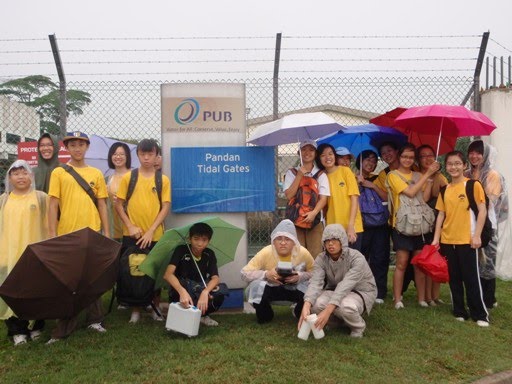
Figure: I simply can't resist putting in this routine group photo. Must show that the participants are in good spirits, right?


Singapore International Water Festival (27 Jun 2010)
Once again, I was roped in to organise the event "Amazing Greenviron Challenge" - an environmental quiz of sorts with indoor and outdoor components at the Marina Barrage. Weather was terrible in the morning so the outdoor part has to be moved indoors. (Right, rain was indeed heavy in June, giving rise to the shocking floods in downtown Singapore.)


Figure: Only 1 photo to show you here - the super group photo with organisers, student helpers and participants.

(Are we not done with the summary yet??? Afraid not... Did I mention that I had a tight schedule then?)

Water Quality Monitoring (WQM) (19 Jun 2010)
Amidst the tight schedule, I managed to sneak in a round of WQM with Team Seagrass at Chek Jawa.


Figure: On this rare sunny June morning, my students prepared their equipment for WQM.

To top it off, I attended the 4-day Wilderness Medical First Responder (WMFR) Course by OBS (Outward Bound Singapore) on Pulau Ubin. More on this in a later post.


Figure: WMFR participants and our dummies

WQM at Pasir Ris
Ah yes, the problematic kid on the block with regards to water quality - Pasir Ris Beach. (The latest advisory on its "fair" water quality is found here.) We checked out this notorious locale on this rainy July morning. Perhaps unknown to most people, this stretch of sand hosts 2 significant patches of seagrasses even though they are not monitored by Team Seagrass. (Some of the Team's members do however check out the seagrasses here in their own capacity.) And since there are seagrasses here, my team will of course be interested in the WQ.


Figure: 1 patch of seagrasses near Sg Loyang


Figure: The 2nd patch of seagrasses near Sg Tampines. I was told that there is a smaller patch further west near the end of Pasir Ris Park. We did not check this one out though.

Tuesday, April 06, 2010

The forgotten mangroves at Sungei Pandan

Talk about mangroves in Singapore and you will hear about places like Sungei Buloh, Pasir Ris, Pulau Ubin and from the savvy ones, Sungei Sembawang, Sungei Punggol, Pulau Tekong. Only from the most experienced naturalists will you pick up whispers of Sungei Pandan. If you look up "Longman atlas: Singapore and the world", you won't even find mangroves there.

There is a very good reason too - Singapore's northern coast is well suited for mangrove building with gentle currents for sediment deposition. Yes, you need to have accumulation of the "yucky muck" for a good substrate. Sungei Pandan mangroves thus appears to be an odd orphan located near the southern coast. Could the conditions at Sg Pandan be similar to those of our northern coast?

I simply can't resist taking my advanced elective module (AEM) class to this interesting habitat for a water quality monitoring (WQM) field trip.

Figure: A massive dam lying right across Sg Pandan. Such dams are common on rivers and canals leading to the sea (Marina Barrage is the big brother among them). They control the loss of fresh water into the sea so that the reservoir (Pandan Reservoir in this case) can be pumped up. Another important function of a dam is to prevent the flow of seawater (read salty water) into the reservoir. Treatment of salty water is expensive since you need reverse osmosis or distillation to do the job. Conventional water treatment does not cut it.

But... (there is always a "but") these dams also disrupts the continuity of the flow, separating the stream into 2 parts with distinct characteristics, one of which being salinity. (1st hint: take note of the vegetation on the bank in the above figure.)

Bad for the aquatic life but great for an outdoor lesson. Here is a Google Earth file compiling the data collected by the participants.

Aside to FMSS students in selected groups: Please use this file to prepare for your case study presentation.

2nd, a dam may prevent precious sediment from reaching downstream. To you, sediment may be muck; to the creatures downstream, it is food, nutrients, home and more. Just as sediment is blocked, the migration of animals for spawning, feeding etc. across the great divide in both directions is also hindered. I am sure environmentalists all over the world have more to say about these dam problems (1, 2; Mekong - 3, 4).
 
Figure: Steady rain for the whole field trip but what the heck, we are living in the tropics - rain is a standard feature. As long as safety is not compromised (e.g. lightning), some work in the rain is good for the spirit.


Figure: A denizen of the mangroves cleverly avoided the rain by following the guy with the umbrella

Figure: Downstream of the dam. Spot the different root systems of mangrove plants. The exciting mangroves in this figure is a vivid contrast to the boring grasses (no offence to the grass people) upstream.

Figure: Mudskippers surfacing to enjoy the cool rain which keeps their bodies comfortably moist.

Thursday, March 25, 2010

Back to Ngee Ann Stream with Fairfield Methodist School (15 Mar 10)

This particular field trip for my advanced elective module (AEM), water quality and pollution, was reported in the Straits Times (25 Mar 10).

I have decided to post some exclusive footage not captured in the news article. (Actually, these are just routine photos I take every time I head to the field.) In addition, I have included a Google Earth file compiling all the water quality data gathered by the students on that hot and sunny morning. The students were given hands-on practice on the use of Google Earth as a means of documenting water quality data.

Figure: The 4 sampling stations displayed in Google Earth. Notice the ugly patch of cleared land. More land has since been cleared as Google Earth satellite photos are back dated. See previous post.

Aside to FMSS students in selected groups: Please use the compiled data in the Google Earth file to prepare for your case study presentation.

Figure: Group work at sampling station 2.
  • The humble umbrella is immensely useful for field work as it can shield one from the rain and sun. (Try recording your data on a rain soaked piece of paper and you will know what I mean.)
  • The other point to note is the highly turbid (muddy) water caused by sediments being washed down the canal from the nearby construction site. In fact, the turbidity exceeds 1000NTU which is the measurement limit of our turbidimeter (you may check the data here). This has never been observed before in this stretch of water.

Figure: Construction site - clearing of the secondary forest in progress. Note the open ground of easily eroded soil

Figure: Moving on from station 2. The canal floor was still wet from the drizzle earlier in the morning.


Figure: The customary group photo at "Graffiti Bridge" (sampling station 3). Many happy faces despite the "bedraggled" appearance

Wednesday, March 10, 2010

AEM: Water quality and pollution (Mar - Apr 10)

It always feel good to get into teaching water quality monitoring (WQM) to students. No doubt, you can argue round and round about the benefits to the environment, the next generation, the world etc. but ultimately, the teacher/instructor has to be passionate about what he teaches. If not, all the other reasons do not matter.

Here is the latest batch from Fairfield Methodist School (Secondary).

Figure: Introduction to WQM by having a "field trip" to the nearby fish pond. Notice the student in the foreground wearing slippers. He became the first "casualty" when he slipped into the water. Yes, such things happen, even in a controlled environment like a fish pond.


Figure: Basic data collected on the fish pond. They seem to indicate that the fishes are having a good time in the well maintained pond.

Thursday, January 28, 2010

Courses on water quality

In response to queries about my courses on water quality, I have listed them here for easy reference.

  1. AEM (advanced elective module): Water Quality and Pollution
    This 40-hour module is essentially for upper secondary school students as dictated by MOE (unless the school is willing to forgo the MOE subsidy).

    Check out this post for more details.
  2. My forest is DYING and the role of water quality
    This 1-day course is mainly catered for MOE teachers even though MOE HQ staff have attended it. I was initially told that the course title sounded wacky and school management (the approvers for my customers - teachers) would not be amused with such a title. However, many participants found the title catchy and wanted to learn more about the course. Hence, the title stays as it is.

    Check out the course details here.
  3. Water Quality in Natural Habitats
    Another 1-day course. This is more suitable for secondary school students and above as it involves laboratory work in addition to the standard (at least for me) field work plus classroom lesson.

    Check out the flyer here.
  4. Freshwater quality and biodiversity
    Duration of 1 day too. This course is suitable for primary school students and above. There is no laboratory work. Instead, the participants get to see aquatic bugs (macroinvertebrates) up close and personal - an  unforgettable experience to most since people in Singapore hardly go out to "play" with nature anymore.

    Check out the flyer here.

FAQs on AEMs (advanced elective modules): Water Quality and Pollution

  1. What are AEMs?
    Check out characteristics of AEMs
  2. What are the dates and times?
    The teacher in-charge will have to work out the schedule with coordinator of the AEM (typically a Polytechnic lecturer). Each module is 40h so it will take about 5-6 full days either condensed into a week or spread across several weeks.
  3. How many participants are required?
    Minimum 20. I normally stick to a maximum of 20 for safety reasons, especially in laboratory and field work.
  4. When must I give you the list of participants?
    The name list can be sent to me latest 1 week before the course starts.
  5. What is the cost?
    <
    br>$400 per pax. MOE can subsidise $345 with $55 coming from the student or school.
  6. How do we go about applying for the MOE subsidy?Check out application of funds for running AEMs
  7. Are teacher required to be present?The presence of a teacher is preferred, especially for the field trips.
  8. What is the AEM, Water Quality and Pollution about?Check out my flyer or the description
  9. If I need more information, who can I approach?For further clarifications on policy and implementation issues, please contact:

Wednesday, June 17, 2009

Advanced elective module (AEM): Water quality and pollution (8 - 15 Jun 09)

What an intense week! 6 consecutive days of conducting my AEM to W5 cluster of schools. Luckily, the AEM involves 3 field trips and 1 out-of-classroom lesson at the local pond. They certainly spice up the entire module. To make this post short and sweet, I will only include highlights of the module here.


Bug hunting. This time round, we gave SP Forest a miss as the whole area appeared to be under construction. Instead, we headed to a tributary of Sungei Pandan. This stream flows adjacent to AYE, next to International Business Park. Lots of snails, dragonfly nymphs, damselfly nymphs and fishes in the water. Even managed to scoop up a freshwater eel.


Back to my number one favourite haunt for water quality monitoring - Ngee Ann Stream. The place is fascinating for its variety of habitats which the stream passes - open country natural to secondary forest to open country urban. You even get to find riffles (so rare in our water bodies) in a part of the forest. As usual, we had our customary group photo at one of the more scenic spots.

Its educational value is also underscored by having 2 tributaries (1 from Clementi Road, another from Bukit Timah Road) joining up to hit Ulu Pandan Road. Based on the water quality data, the 2 tributaries have rather distinct personalities e.g. pH, turbidity, iron, alumuminium, conductivity. But of particular concern is the rather high pH (> 9) in the tributary from Bt Timah Rd. This was never observed in 2008 even though the values were consistent with the data collected in the previous week in a course for MOE (see earlier post). I will reserve my speculations till further data is available.


This time round, we tried a new field location - Sungei Pandan/ Pandan Mangroves. This is one of the rare mangrove swamps which is not found in the northern coast of Singapore. (Purists may argue that this is not a true mangrove as it does not possess all the defining vegetation and habitats but what the heck.)
Any scientific study in mangroves or coasts will have to check out the tides. We found ourselves in a rising tide but still at a relatively low level, meaning mud walking (or sinking) for all involved.
Found lots of Passiflora foetida growing wild and managed to sample some ripe fruits before the birds get to them.
This stretch of Sg Pandan is especially interesting as its flow is dammed by a set of sluice gates. The water quality data will immediately scream out the differences between the stretches before and after the gates, the most basic being one side having fresh water while the other side has salt water.


Some commonly seen activities of students: trying out the disposable glove in a way it is not designed for; drying out the feet when the shoes are wet

Wednesday, April 08, 2009

Field Day at Sungei Buloh Wetland Reserve (SBWR) (28 Mar 09)

A perfect day for water quality monitoring - the morning weather is bright with a good tide coming in - no lack of water for monitoring and sampling.


Students are all fired up for half a day of field work though they seem more interested in the surroundings than in their tasks of water quality monitoring. This is understandable considering that most of them have not set foot on SBWR. Neither have they ever set their sights on the insects, fishes, plants of a mangrove swamp. In a way, it is lamentable that our youth does not have the inclination or time to visit such natural areas but it also presents a great opportunity for Nparks and schools to work harder on their environmental education programmes.


Amazingly, some students confessed that they prefered a wilder area for a field trip e.g. "Ngee Ann Stream" where you have to bash your way through tall grasses and hurt your butt through slipping on mud. SBWR? "Too civilised for us"


As the day wore on and the sun reached its zenith, weariness grew on their faces... one started to see the standard "too tired to talk, too tired to think" behaviour. Perhaps the route we took has passed the point of diminishing returns. This is something to review for the next run of this module.


But something unexpected showed up to bring them back to full attention - a full blown shower with accompanying thunder with us stuck at the last sampling station and the visitor centre clearly out of sight. I consider this the highlight of the trip as it reminds us to respect nature. Nature does not care for your plans and to-do lists, it just does what it does but offers an exciting environment very different from the controlled conditions in a lab or classroom.

Figures (L-R, T-B): Checking out the resident fauna at the main bridge; clambering among the trees to get a good spot at the water edge; "environmental couple" at work; grand finale - sprinting back to the visitor centre, then the bus in bone drenching rain.


Tuesday, March 24, 2009

A myth busted... and a new believer is born (10 Mar 09)

How often do you hold onto a belief for years and see it busted to shreds within minutes? Not often, I hope unless you have been living in a cave.

It started as another lesson for a secondary school. These students were brought out of the classroom to yet another field trip to a nearby pond. They were given big, robust nets and told to dig into the bottom mud and be aggressive about it. No big deal for kids 50 years ago but for them, it was a novelty... a thrilling experience no classroom lesson could have prepared them for. Yes, you have be there to get your hands dirty to find out.

You are probably wondering what they were supposed to do with the mud. In short, check out the bugs in the mud. Anything without backbone, isolate and identify them. These include insects, worms, snails and....

Bingo! The students scooped up half a dozen or so leeches! These are not your 1-inch wriggling critters commonly found in Malaysian forests. Imagine these half-foot whoppers* clinging everywhere on your body including those parts of your body not exposed to the sun, furiously competing against one another to feed on your blood.... blood chilling. And I have always believed that there are no carnivorous leeches in Singapore. There goes that belief. Never will I nonchalantly wade into an unknown pool/pond/reservoir here.


Is anyone screaming yet? Oh yes, the students were indeed screaming, not in terror but in excitement. I guess there is a big difference between seeing leeches in a sample bowl and having them stuck on your own body.

On the technical side, the presence of this significant number of leeches indicate a bad water quality with a low oxygen content. This was confirmed by our oxygen tests.

In case you conclude that I hate leeches, on the contrary, they are one of my favourite animals. Not the kind that you keep at home but the kind that you admire. Their tenacity and survivalability rank tops among animals. This is in addition to their arsenal of biochemicals that allow them to do what they do best - all these packed into a compact but ferocious package.

* These half-foot critters are fish fry compared to the half-METRE Amazonian leech.

Figures (L-R, T-B): Classroom lesson of looking at dead (and boring) specimens under the microscope; trying to score some live specimens in the field; mud and bugs are part of the job; searching intently for the tiniest bugs; cute aquatic leeches - are they carnivorous buffalo leeches?; check out my article on the chemical secrets of the leech in Singapore Scientist no. 111 (2008)