Showing posts with label Phytoremediation. Show all posts

Friday, September 15, 2017

Water quality standards for rain garden

*Some private information in the original email have been edited out*


I have been tasked to work on the newly set up rain garden. I am basically testing the efficiency of the raingarden, i.e. is it able to effectively improve water quality of the influent stormwater before it gets discharged into the reservoir.


I have been looking through at both PUB and NEA's websites to get a set of water quality standards for the parameters that I am testing, i.e. 


i) E.coli


ii) Suspended solids


iii) Nitrates


iv) Phosphates


However, I have only been able to get the set of standards for drinking water which would not be ideal for my project as the standards or permissible limits is too stringent. 


So for the purpose of my project, I would like to know if there are standards that I can rely on for the above tests? 


I see some international standards on recreational water, drinking water, etc? But I am not sure what would the Poyan reservoir be considered as?


Some of the overseas standards that I found online show only certain parameters and in addition to that I find it very difficult to find a standard where the values remain the same for the different countries.


I hope that you will be able to assist me in some way possible.


Thank you.


Best Regards,
K


Dear K,


It's good to hear that you are working on a rain garden to improve the quality of surface runoff into our reservoirs. Over the years, the development of Singapore has removed much of our natural vegetation so seeing highly muddy waters (aka kopi susu) in our canals after a heavy rain is quite common.


As for your question, PUB tests against its own water quality standards within its reservoirs. Unfortunately, these standards are not available to the public.


2 possible options:
 
  1. You can make use of NEA effluent discharge standards for a controlled watercourse (i.e. a waterway that flows into a reservoir). It monitors 36 WQ parameters as of this writing. Except for E. coli, they include the other 3 parameters that you are interested in.
  2. Alternatively, you can use Nparks WQ standards for the water bodies under its purview. The standards were derived from WQ data observed in 59 different water bodies.  Regrettably, these standards are not available online as far as I know. Published by CUGE (I was a member in its technical committee to advise on their contents), the 2 relevant titles are:

Guidelines on Water Quality Assessment and Management for Tropical Ponds. You can check out my previous post on this title.

Guidelines On Water Quality Monitoring For Tropical Ponds

They are available from CUGE - https://www.cuge.com.sg/research/catalog.php
Their standards are not exactly the same as what you are interested in. The closest are:
  1. Turbidity: < 30NTU
  2. Total nitrogen: < 1.0mg/L
  3. Total phosphorus: < 0.06mg/L
  4. Enterococcus bacteria: < 200CFU/100mL
Good luck!

Tuesday, June 13, 2017

Rainwater and river water: collection, treatment and storage


Dear Mr Chen Ko


My name is Thomas, and I am looking to work on a small-scale implementation for a water storage and filtration pipeline. I would like to seek your advice on the following as I deemed them requiring a more informed opinion than just a simple google search. Please excuse me if terminologies used are inaccurate or the context is too generic - I would definitely like to understand more about the practicalities and improve if possible.


This pipeline is a proof of concept to collect rainwater and river water, treating them separately, then mixing it (via manual carry), then storing it in a tank (preferably steel) for later or immediate treatment. The treated water will placed in a separate tank for distribution by tap to pail/smaller storage tanks to be given to the rest of the community or other usages. These will then be boiled on their if used for consumption, otherwise for bathing/watering plants.


1. Natural means to treat water/water tank. The temporary storage tank could hold the aggregated water for a week up to a month - and I think some bacteria could fester, and even if it was already clean, some might stick on to the inner tank surface. I attended some talk which spoke of possibility of using Hydrilla to clear the water, and some other plants/organic (aka cleansing biotopes) material which could dissuade bacteria growth or absorb other harmful things. An use case is cleaning the inner tank itself. This sounded too good to be true from the onset, but I do see some use for the Hydrilla to clear the water before UV treatment. May I know if such methods have been tried before, and whether it would be feasible to focus on this area?


2. Scaling up UV disinfection. I read one of your posts stating the UV Pen (i.e. Steripen: https://www.steripen.com/products/prepare/)  drops in effectiveness if there are still particles above a certain size as bacteria could hide behind them and the light cannot reach them. What about the feasibility of a slightly larger version of the UV pen, to ensure more thorough disinfection? The idea is to shine multiple pens inside the tank, or have a larger UV light do this job. Does the cost increase a lot for such an implementation?


3. Water quality measurement. Taking measurements of water quality (e.g. pool test, turbidity). It seems infeasible to keep sending water samples from this pipeline for testing. And instead of doing a pool test manually each time, what are your thoughts on integrating some sensors to collect this data electronically? 


The assumption is that rain water is cleanest - but mixing with river water introduces some issues, so there is need to check for:

i) E-coli

ii) Heavy metals

iii) Chlorine, Fluoride, Nitrates.


Would you know reliable vendors and quote estimates that can detect these in one? I have done an Internet-of-things module in school, and sensors seemed quite cheap - I might be wrong regarding these specific set of measurements though, thus my question.


Many thanks for reading this, and wishing you a good week ahead!


Warmest regards

Thomas


Hi Thomas,


Do you have a particular location in mind to implement this project? it sounds like a developing country!


You also did not mention the size of the community you are serving.


1.       Are you collecting rainwater from the roof or from the ground?

2.       If it is from the roof, it is more efficient to have each individual household handle its own collection unless you have a really big community building (e.g. church, hall) to collect it.

3.       You are indeed right to point out that rainwater is clean so I don't see the logic in mixing it with river water.

4.       Even if the location you have in mind does not have adequate rainwater, it is not economical to mix it with river water.

5.       It is easier to have separate treatment trains for rainwater and river water. And perhaps release treated rainwater (treatment should be minimal anyway) for consumption and treated river water for washing/flushing/irrigation.

6.       Phytoremediation has been documented to be effective in cleaning up water. I remembered Hydrilla used too though I can't recall its effectiveness off my head. A few issues to keep in mind though

7.       Most phytoremediation work was to clean up wastewater which means the treated water was not to drinking standard.

8.       Phytoremediation is typically used to remove organic pollutants, nutrients, certain heavy metals. It may reduce the pathogen population in the process but this is usually NOT the reason for phytoremediation. In fact, the process may introduce bacteria of its own into the water. (Admittedly, these introduced bacteria are probably not pathogenic.)

9.       The Steripen (1, 2) is designed for personal UV treatment of water. Instead of using multiple Steripens, you would be better served with the correct sizing of the UV treatment unit. This of course depends on the community size you are serving.

10.   Don't forget the need for electricity (which may not be easily available in your location) if you are installing a large scale UV unit.

11.   And you are right, clarity of water is VERY important for UV to work effectively. Turbidity of less than 1 NTU is ideal.

12.   The technology of Online measurement of water quality parameters has always been progressing in the water industry.

13.   I am not sure what sensors you have seen to be cheap (probably temperature, conductivity, pH) but the rest of the sensors are not cheap and most of the water quality parameters are not available as sensors.

14.   Many WQ parameters require certain sample preparation and chemical reaction, possibly involving heating. These cannot be duplicated by a sensor alone and will require a full suite of automation to accomplish, involving chemical reservoirs, precise sampling, mixing and heating of accurate amounts of chemicals. And you still need a detector which may not be common off-the-shelf kind.

15.   Heavy metals is a big group of very different elements e.g. cadmium, nickel, lead so they cannot be measured together as a single parameter. You have to know exactly which one to measure. And oh, they cannot be measured simply by a sensor alone.

16.   And testing for E. coli typically involves incubation - anyone with 1-2 days to spare?

17.   Having said all the above, yes, I will still recommend that you install the sensors for the cheap tests - temperature, pH, electrical conductivity as they can indicate problems if they are out of specs.

Hope the above are not overwhelming.


Good luck!


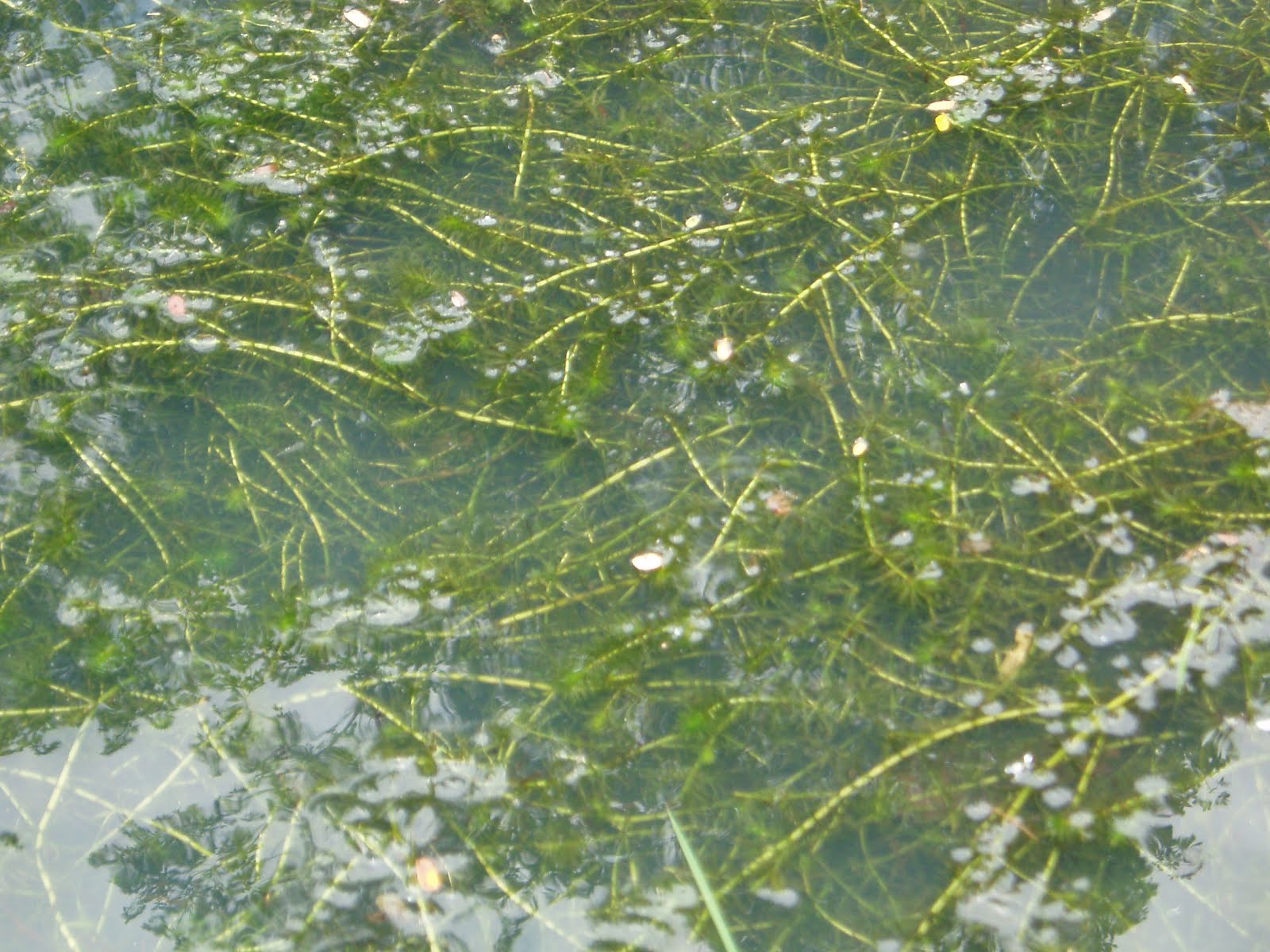
Figure: Hydrilla in the wild - Ngee Ann Stream which I have not visited for a long time
 

Saturday, July 09, 2016

Revisiting sustainability: Earthship living

Some years ago, I have written about the organisation, Earthship Biotecture here and here. I still maintain my stand that it is a useful model for sustainable living. As their "Earthships" (what they call their sustainable houses) are based mostly in USA, I have my doubts whether their designs are effective here in tropical Singapore. Nevertheless, they can provide a good starting point for further modification if anyone here wants to have their own sustainable house.


Figure from Earthship Biotecture: Exterior of an Earthship. This is 1 of several different designs.
Figure from Earthship Biotecture: Interior of an Earthship showing a "botanical cell" (the plants area) for grey water treatment

In fact, the Earthship was an inspiration for our very own sustainable living lab in SP (Singapore Polytechnic). I was involved in the designs for the rainwater harvesting (RWH) and grey water recycling (GWR) modules. These culminated in a functional prototype set up in SP - mentioned in some of my earlier posts (1, 2).


Essentially, our lab was planned as a fully functional and sustainable living space equivalent to a 4-room flat. Besides showcasing certain environmental technologies, it was to serve as a practical classroom for our students. But due to reasons which I will not disclose here, the project was terminated. Despite our disappointment, it was a good learning experience for all those involved in its planning and design.


For those out there who want to try their hands to build their very own living lab, I suggest starting with the following books from Earthship Biotechture. (They have apparently come up with more books but these were the two that started me on exploring the world of sustainable living.)


Earthship: How to Build Your Own, Vol. 1

Water From The Sky
For a review that I have written on Water from the Sky, check out here. 


Imagine building a house with old tyres, empty glass bottles, soda cans and ramped earth. Fix up the roof with solar panels and a rainwater harvesting design. Clean up your grey water (i.e. water from the sink, shower, laundry) with plants. Not forgetting you can munch into the fruits e.g. bananas borne by the afore mentioned plants. The "clean" grey water can now be sent to flush your toilet. Water for drinking, cooking and bathing are from the rain. Yup, that about describes what an Earthship is about.


Admittedly, sustainable living is more than living in a green house (NOT greenhouse) or even an Earthship. It includes a whole slew of lifestyle choices that can be inconvenient, uncomfortable or costly. You may have to forgo that dazzling 56" LCD TV or that therapeutic soak in a bathtub (sorry, you have to use the shower like everyone else). Recycled cards are not exactly cheap. Heck, it is far simpler to get your water from the utilities company than having to store rainwater and attending to the maintenance of your RWH system. At least, you worry less about mozzies when your water comes piped in.


Nevertheless, a house designed for sustainability is a good first step to green living. And if it is truly well thought out, the issues of inconvenience, discomfort and cost can be mitigated.


Wednesday, August 07, 2013

More recognition to grey water recycling!

Grey water (1, 2, 3) recycling has always been a less glamorous cousin to rainwater harvesting. After all, rainwater is clean water for drinking, bathing, cooking... all important processes for our health and well-being, while grey water is wastewater best kept out of sight and mind... as long as someone else is taking care of its disposal.

News update: Water is water is water (no typo here) by whatever name. The only difference lies in the "impurities" in the water, hence giving rise to black water (toilet bowl), grey water (sink, laundry, bath), yellow water (urine only), dark grey water (kitchen sink, diapers laundry). All water is intricately connected in the water cycle - both natural and human. In other words, rainwater or any other "clean" water can come from grey water. Therefore, it pays to conserve (read recycle) and handle your grey water properly.

It is therefore great news when I see that PUB has added a section on the guidelines of grey water recycling in Singapore.

1. Alternate sources of water
http://www.pub.gov.sg/conserve/CommercialOperatorsAndOther/Pages/AlternateSourceofWater.aspx
On this page, rainwater and grey water are officially recognised as alternative sources of water, not just at the national level or at the residential/individual level. I have written about rainwater harvesting in an earlier post.

2. The document itself
http://www.pub.gov.sg/conserve/CommercialOperatorsAndOther/Documents/greywaterRequirements.pdf

Some highlights
  1. It goes without saying - no potable use. But irrigation and general washing are also forbidden. Why then do you recycle grey water???

    Well.... it can only be used for toilet flushing and as cooling tower make-up water.

    Personally, depending on your treatment process, grey water can even be made potable. Even with simple treatment, its water quality can be made adequate for general washing and irrigation.
  2. As for rainwater harvesting, grey water recycling must follow PUB's standards for fittings and code of practice for water services, as well as NEA's standards for prevention of mosquito breeding.
  3. Raw grey water should not be stored for more than 24 hours. This IS reasonable as any time longer will lead to anaerobic conditions and foul odours.
  4. Treated grey water should not be retained for more than 72 hours. This DEPENDS on the type of treatment. If the final water quality is that of drinking water, I am sure the duration can be stretched.
  5. Incidentally, there is no mention of WHAT type of treatment process you should use... Instead, whatever treatment must produce a water conforming to the water quality guidelines (listing the various water quality parameter and their limits) given in this document. This is immensely useful as previously, there were no such guidelines.
  6. And also very useful is the schedule for water sampling and monitoring e.g. testing for E. coli and coliform should be done monthly.

 Figure: PUB guidelines for treated grey water quality

Figure: PUB sampling regime for treated grey water

Source of the above 2 figures: PUB document (http://www.pub.gov.sg/conserve/CommercialOperatorsAndOther/Documents/greywaterRequirements.pdf)

In conclusion, I believe we are on the right track on publishing such standards for grey water in terms of its water quality and testing schedule. I hope more developers and individuals will take up the challenge to implement grey water recycling on a residential or building scale.

Natually, there is much more to be done. E.g. I am impressed when habitats use plants not only to clean up grey water but also to provide edibles for their inhabitants. Bananas can be clearly seen in my previous posts (12) illustrating this concept in an Earthship.

Bananas
Figure: Bananas, anyone? (Source: http://blog.insureandgo.com/food-and-drink/2013/03/8-amazing-facts-you-might-not-know-about-bananas/)

Wednesday, October 24, 2012

Green project part 3: Integrated rainwater harvesting and grey water recycling systems

You may click on these links for part 1 and 2 of this green project.

After months of planning, sourcing, talking to vendors etc., the prototype for the rainwater harvesting (RWH) and grey water recycling (GWR) systems is up. This prototype combines both systems into a single framework (pun intended) and is intended for testing the components and process flow as a coherent whole. Though the final design in the "actual" project will appear very different, this prototype and the actual system basically share the same elements and process flow.

Our SP Library has kindly allowed the prototype to be placed in their garden for testing. Bravo to them!


Figure 1: Figure shows the mini grey water recycling system incorporating  plants as the "filters" in 3 separate cells. In the background, you can see the book shelves of the library. If this prototype proves successful, it may be placed as it is for the long term as an educational tool for our students. Posters will then be fixed strategically to explain the capabilities of the system and how it works.
Figure 2: To polish up the grey water and the rainwater, off-the-shelf filters are installed. Depending on the quality of your input and the desired quality of your output (what do you want to use your treated water for?), these filters may not be necessary.

Wednesday, May 02, 2012

My current green project part 1: grey water recycling system

Here is the mindmap which I presented to a group of participants for a major green project we are working on. (Sorry, can't reveal much detail at this point of time.) It contains the important design considerations for a grey water (i.e. water from the sinks, shower, laundry BUT not the W.C.) recycling system inherent in the project. (Click on the figure on look at the whole map.)


 Figure: Possible candidate for the plant treatment cell - Canna Lily. This is an example of phytoremediation - using plants to clean up the environment.
Figure: Another possible candidate for the plant treatment cell - Heliconia sp. Both candidates are easily available in Singapore as they are extensively used in landscaping.

For more information on phytoremediation, refer to my previous posts here.

Friday, December 16, 2011

Question on phytoremediation

Dear Mr Kwok,


My name is C and I am a marine life enthusiast like yourself. I recently had the opportunity to visit a few fish and shrimp farms in Brunei. These farms are in land farms beside the coast. I noticed that in some of the ponds the water is obviously highly toxic with large amounts of foam floating on the surface. Owner confirms that the water in these ponds have not been changed for 1-2 months.

As each pond is approximately 10 metres by 25 metres and 2 metres deep, each farm has 40-50 ponds, it may be expensive to perform frequent water change such as those done by owners of reef aquariums.

So if there are say 20 such farms in the area, each discharging the waste water directly into the sea, wouldnt the water quality in the area be adversely affected?

The question I have for you is this:

1) In a reef aquarium, we use a protein skimmer to remove dissolved organic materials and water changes to dilute the toxic compounds in the water. This is obviously too expensive for commercial fish farming. Some hobbyists have experimented with using mangrove saplings to remove dissolved organics as a replacement for the protein skimmer. Is it possible then, to grow mangrove on floating pontoons in the fish pond? Would this be a cost effective way to improve water quality in the pond and there by improving food safety?

2) What are the issues we might have to think about if we want to plant mangrove on floating pontoons?

Thanks and regards,

C


Dear C,

You may want to read through my posts on phytoremediation 

especially Singapore latest water attraction - Sengkang Floating Wetland and Before you write off a plant as a weed, read this


There are certainly many issues involved in phytoremediation via mangrove plants on floating pontoons aka floating wetlands, from conception, evaluation, design, implementation, operation to management.


I will attempt to touch on those that are close to my heart though I am sure there many other important ones which I will miss out.

1. I assume you want to use mangrove plants (I suppose you are referring to the tree types) because the water is brackish or salty. I strongly believe mangrove trees have a lot of potential to perform phytoremediation, especially removal of nutrients from pond water. However, though widely used in Asia and other tropical countries, documentation of their implementation and effectiveness are still lacking compared to other “traditional” phytoremediation plants. Certain salt marsh plants (e.g. cordgrasses, seaside rush) have been documented to be successfully used in brackish/salty water. Nevertheless, I would still encourage you to try mangrove trees since they are very much part of our natural heritage.


2. Cost! This can be a big issue if you are using any of the proprietary floating mats for holding your plants. There are many high-tech mats out in the market and they will cost you more than having a similar constructed wetland built on land. Alternatively, you can go the DIY route. I have seem floating platforms made out of bamboo, plastic bottles and other recycled materials.


3. One gripe I have with floating wetlands is their short reach with respect to the depth of the water body. You mentioned that you intend to use such floating wetlands to remove dissolved organics. Ideally, you will need a good root system well distributed laterally and vertically in the pond to achieve that. The root system allows bacteria to flourish and these are the guys on the ground removing your organics. Hence, the mangrove roots will need to go as deep as possible but a floating mat by its nature can impede the spread of the roots.


4. What about harvesting? Do you intend to remove the plants periodically? What if they grow too big for your mat to support? On the other hand, you need your plants to be big to be efficient in phytoremediation (think more biomass to absorb the nutrients or more roots with longer reach for bacteria to grow). Of course, harvesting and replanting will incur more costs.


Good luck!


 Figure: a DIY floating wetland in a pond in Chinese Garden

Figure: Rhizophora sp. in Sungei Buloh Wetland Reserve - a mangrove tree that has potential in phytoremediation, especially in brackish/saline waters

Monday, October 03, 2011

Water quality monitoring workshop for CUGE

I had the opportunity to conduct an inaugural water quality monitoring (WQM) workshop for CUGE (Centre for urban greenery and ecology). The participants were mostly Nparks staff. Before this, I had only worked with MOE teachers and students in my WQM courses.


It was indeed an eye opener. With their outdoor experience, my field trip became a non-issue. No complaints about the mozzies, the mud or the weather.

In fact, I dare say this field trip to Ngee Ann Stream was my most challenging. A huge tree has fallen over the path I normally took my participants. There was no clear path through it or around it. Fortunately, a hardy participant (L) came forward to blaze a trail through the fallen tree while I was wondering whether the rest were able to handle such bashing through. Reminding myself these were Nparks staff, everyone came through without a scratch despite the big ants scrambling all over the branches in protest of our intrusion. A few other “garang” types helped to clear the trail as L and I took the lead in our trailblazing.

Because of the wet weather earlier in the day, the canal was flooded. Usually a convenient way to cover ground, the canal became out of bounds. Since these guys and ladies were as good as I thought they were, I decided to do another round of bashing through a patch of tall grasses. Since these were only grasses (not trees or shrubs), I used my handy walking stick to sweep the blockage aside. Problem solved.

Though most of the participants have no chemistry background, they were thrilled with trying out the water testing kits back in our classroom. Designed for field work and hence simple to operate, most participants took an instant familiarity with the kits’ usage. In fact, they were more than enthusiastic to stay after 5p.m. to finish their water testing with the kits. It is always a pleasure to observe students with a passion to learn and experiment.

Figure: My favourite monitoring station along Ngee Ann Stream. A good shady spot for the participants to rest after the "gruelling" hike through tall grasses and steep slopes. Notice the tall grasses in middle - we had to bash through those after this station.

Figure: This canal is normally dry with only a small flow in the centre. On this day, an earlier rain has made the canal impassable. Even the participant has to collect a water sample on the steps. Not for school students.

Figure: Using water testing kits back in the classroom

Figure: Participants putting up their water quality data for all to see and compare.

Figure: Bug hunting and identification at Chinese Garden

Figure: We had the rare chance of checking out what Chinese Garden has implemented its admirable efforts to go green. This is a phytoremediation project to treat and reuse grey water from a toilet's sinks.

Update: Here is the link for a write-up of the workshop on CUGE' website
http://www.cuge.com.sg/October-2011 > 04 Oct 2011 - A Fun and Enriching Hands-on Experience Sampling and Testing Water

Tuesday, July 26, 2011

Phytoremediation Question

Dear Mr Kwok,


It was a pleasure to read your post on the topic "Before you write off a plant as a weed, read this...".

I enjoyed reading the article and found the information on phytoremediation both fascinating and very comprehensive.

I will like ask if there are any regulatory or monetary policies in Singapore to be considered in regards to phytoremediation applications.

I don't seem to be able to find this information and will really appreciate your sage advice.

Thank you.

Warm Regards,

J

Dear J,


Glad to know that you enjoy reading my blog article.


Incidentally, you did not mention your purpose of using phytoremediation. In it for treatment of industrial waste? Agricultural waste? Domestic waste? Rainwater harvesting? Or simply storm water filtration? Are you using it to clean water or soil or perhaps even air?


As far as I know, there are no regulations in Singapore governing the use of phytoremediation per se. However, there are likely to be regulations controlling the end result of your phytoremediation endeavour which is tied to your purpose of application. For example, if you intend to use phytoremediation to treat industrial waste before discharge into the sewers, you will have to adhere to National Environment Agency (NEA) effluent discharge limits which may or may not make phytoremediation feasible.


Public Utilities Board (PUB) does have some guidelines (Active, beautiful, clean waters design guidelines) pertaining to the design and use of water design features (e.g. bio swales, rain gardens, wetlands) to clean up storm water.


What do you mean by monetary policy? If you are referring to monetary incentives, no, I have not heard anything. The closest is PUB is quite ready to invest in pilot-scale floating wetlands in its reservoirs (Jurong Lake, Pandan Reservoir, Sengkang Floating Wetland) and a full-scale constructed wetland (Lorong Halus Wetland at Serangoon Reservoir) to try out phytoremediation.


Phytoremediation is an emerging technique in environmental pollution control. But it lacks documentation of successful applications in this part of the world. And no matter where in the world it is used, phytoremediation takes relatively long for treatment to complete and precious land is needed grow and maintain the plants that form the heart of a phytoremediation system. Money will certainly trickle into R&D in phytoremediation though I am not sure that money will be gushing into full-scale application of phytoremediation anytime soon, at least not in this part of the world.


CK

Saturday, July 23, 2011

How to get rid of your seemingly unstoppable pond algae

Excessive growth of algae (aka algal bloom or eutrophication) is not a new problem in Singapore. You can sometimes see a canal or even a reservoir taking on an unnatural greenish or bluish tinge. For the aquarium hobbyist, it is just as tough a nut to crack as the algae is removed physically, chemically or biologically, only to return with fresh vigour after a while, seeminlgly impossible to kill.


Figure: "Orange" algae in stream in Chinese Garden (Apr 2011)


 Figure: Pond badly overgrown with "green" algae at Sungei Buloh Wetland Reserve (SBWR) (Mar 2011)


Figure: Another shot of the same pond in SBWR (Mar 2011)


With a sprinkling of scientific principles, here are my sentiments on curbing this tough guy.

First: scoping out your opponent
Find out who this tough guy really is. Algae comes in all sorts of flavours, from red, green, blue-green, brown to diatoms and dinoflagellates. To really nail it down to species level, you will need molecular techniques in well equipped labs. Since most of us do not have access to such high powered stuff, we will have to settle on visual examination under microscope. (I agree that most of us do not have a microscope stashed away at home either but at least most schools should have a few to play with.)
 Figure: Microcystis spp under 10x magnification

Figure: Anabaena sp under 10x magnification


Once you have an idea of your guy, check out his characteristics. How does he grow? What are his most important nutrients? Which nutrient is the limiting one? In the case of the above 2 algae, they normally bloom in an excess of phosphorus usually in the form of phosphate.

Second: scoping out your water
Hey, this is water quality blog so yes, you have to check out your water quality. The standard parameters include: dissolved oxygen (DO), electrical conductivity (EC), turbidity, pH, alkalinity, hardness, nitrate, ammonia, phosphate, biochemical oxygen demand (BOD), chemical oxygen demand (COD). Feel free to add more if you have the resources but the above should be a good starting point. Throw in chlorophyll a (a chemical found in algae) if you think you are up to it.

Go through your water quality data. Is there anything wrong besides the algae you observe? Anything amiss could point to some systemic problem that might have triggered the algal bloom. Following the above examples of Microcystis and Anabaena, the phosphate level is likely to be elevated.

Comparative studiesUnfortunately, it is hard to define what is meant by elevated in a natural environment impacted by numerous uncontrollable factors. One way is to make comparisons. Ideally, you should compare the same variable against time i.e. what was the phosphate level 1 year, 5 years, 10 years ago. Unfortunately, almost no one in Singapore (short of PUB in their reservoirs) does regular long term water quality monitoring (WQM) of their water bodies.

The alternative is to compare against a nearby "clean" water body. Since it is algae free, does it have a lower phosphate level?


Third: scope out your environment
Assuming you have discovered elevated phosphate level in your algae infested pond, ask: where does it come from? What are the sources of water flowing into your pond? Does surface run-off carry fertilisers from your next door vegetable farm neighbour into your pond?

You may have to check historical records too as your pond  may be sitting on an old farming area. If your pond sediment is choked full of phosphate from chicken waste from the previous chicken farm, you will have to get rid of the sediment.

I am all for long term solutions so learning the source of problem and tackling it at the source has always been my principle.


Fourth: ACT
As mentioned earlier, you may have the option of physical, chemical and biological methods.

Physical
Drain your pond and dredge out your sediment if it is the source of phosphate. You may also mechanically remove your algae via nets and filters

Chemical
Add alum or other chemicals (there are quite a few exotic ones in the market now) to bind the phosphate in your water into solid form and remove the solids.

Biological
By the nature of their operations (e.g. nature parks), some organisations are reluctant to use physical and chemical methods. Biological methods like phytoremediation appears appealing because of their naturalness. Yet, they may not pack the punch necessary to remove the nutrient (e.g. phosphate) sufficiently.
Other actions
Naturally, if the source of nutrient appears to come from your surroundings, you probably to get your neighbours into the picture to discuss ways to resolve your problem.

Thursday, April 07, 2011

Latest wetland craze - Lorong Halus Wetland

Wetlands seem to be all the rage in Singapore right now. With the launch of Sengkang Floating Wetland in November 2010, we now have the latest wetland launched (kinda reminds me of the incessant condominium launches in Singapore now) at Lorong Halus on top of our old landfill before Pulau Semakau took over. After talking to 2 staff from CUGE (Centre for Urban Greenery and Ecology), I found that there are many more wetlands being built all over our island, being part of experiments to clean up water.

Hey, don't get me wrong, I am all for installing constructed wetlands. If designed and managed well, they are effective in improving water quality (see post on using plants to clean up water). They are also pretty to look at, especially if the wetland attracts a diverse range of wildlife. Unlike artificial concrete and steel in a wastewater treatment plant (WWTP), a constructed wetland is mostly natural which is where its greatest appeal lies. (Though constructed wetlands are supposedly cheaper than conventional WWTP, I was told that our much publicised wetlands run into price tags of six figures or more. Perhaps, most of the cost went into paying the foreign expertise for design and possibly imports e.g. floating mats to make a floating wetland.)

The best thing about Lorong Halus Wetland (LHW) is it is not just a showpiece. It actually works! It functions as a treatment unit for leachate escaping from the former landfill at Lorong Halus. Leachate from a landfill can contain all sorts of nasty contaminants like heavy metals and toxic organics which can escape into the Serangoon Reservoir and subsequently into the water treatment plant.

What does the future hold?
I personally believe that constructed wetlands (a type of phytoremediation - defined as the use of plants to clean up soil and water) will become more widespread in the near future. As society becomes more environmentally conscious (what with the issues of climate change being publicised almost non-stop nowadays), people are starting to look for sustainable and environmentally friendly methods of treating wastewater. Even though constructed wetlands have their limitations (e.g. a need for land), their natural appeal and sustainable character are hard to beat. And if you are business minded, this is one natural technology that should not be overlooked as its market (especially in developing Asia) is set to grow. I will be writing more about this in future posts.

Back to LHW

Figure 1: PUB (Public Utilities Board) seems to releasing this watershed map of Singapore in recent projects. (Read more about how to interpret a similar map in post on Sengkang Floating Wetland.) Of particular highlight is the dark blue (also blown up as a circular insert above) area which delineates the watershed for Serangoon Reservoir.

Figure 2: Compare this old watershed map from PUB to the one in Figure 1. This old map split Singapore into only 3 catchment areas - East, Central, West. I believe this is more for adminstrative purposes (certain PUB departments are also split according to these 3 regions) rather than based on geography.
 Figure: The wetlands are in the upper part of the figure, consisting of reed beds (green with white dots) and polishing ponds (small patches of light blue).
 Figure: As in Sengkang Floating Wetland, there are ample signboards to educate the visitor about the site. Here, it explains why a constructed wetland is needed at Lorong Halus. (Answer: to clean up the leachate escaping from the landfill.)

 Figure: Another signboard explaining the need for polishing ponds after the leachate has gone through the reed beds. (Answer: the ponds are there to remove leftover nutrients and suspended particles.)
 Figure: In the distance, you can see the Serangoon East Dam which closes up Serangoon Reservoir. I imagine like most local dams, it only allows water to flow out and not in from the sea, hence, keeping the reservoir water fresh and preventing seawater from intruding.
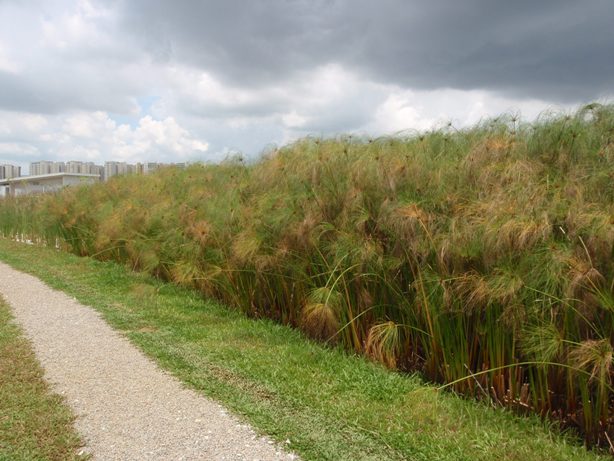
 Figure: One of the reed beds consisting of Papyrus. You probably find that this layout does not fit the definition of a wetland but it does or at least, it is defined as a constructed wetland. This type is known as HSSF (horizontal sub-surface flow) where the wastewater flows in the sub-surface via the plant roots where treatment takes place.
 Figure: Another reed bed, notice the gravel filling up the constructed wetland. This is advantageous because the wetland is "covered up", hence is aesthetically more acceptable - no unsightly wastewater and little offensive odours. Hey, you can even walk across the gravel bed as the gravel filling is well packed. Also the use of gravel allows the wastewater to flow underground easily through the empty spaces among gravel pieces.
Figure: A polishing pond. This design is also known as FWS (free water surface) as opposed to HSSF. By this time of the treatement process, the wastewater should be more or less cleaned since the reed beds have already done their dirty job of removing most contaminants. Therefore, an open water surface (or FWS) will be quite reasonable here.

(Update: you can find out more about how to clean up rainwater before it flows into our reservoirs in PUB's ABC (active, beautiful & clean) waters design guidelines. These guidelines advise developers and industry professionals to incorporate environment friendly features such as rain gardens, bioretention swales and wetlands in their developments.


Remember our watershed concept? Almost 70% of rainfall in Singapore lands in a watershed somewhere, ultimately ending up in our reservoirs. The plants and soil media employed in the above features act as “filters” to remove nutrients and sediments from the water going into our waterways.)

Tuesday, January 04, 2011

Singapore latest water attraction - Sengkang Floating Wetland

I finally had the chance to visit this latest water attraction in Singapore. It is not in Sentosa but right in the middle of Punggol Reservoir surrounded by Sengkang, Anchorvale and Punggol housing estates. Publicised since at least 2007, the Sengkang Floating Wetland was finally launched in Nov 2010 by PUB (Public Utilities Board). See PUB press release 07 Nov 2010: Wet and Wild


Figure: PUB poster on "Sengkang Floating Island" (circa 2007)

Figure: A map showing the floating wetland (in green) in the middle of Punggol Reservoir with Anchorvale Community Club in the east and Sengkang Riverside Park in the west

What I found highly useful are the numerous signboards describing the wetland, how it works, the importance of the watershed (covering Punggol, Anchorvale and Sengkang) and the various water plants grown on the wetland itself.


Figure: This is probably the best take-home message from the signboards. It actually shows the delineation of the watersheds (light blue)for all 17 reservoirs (dark blue) in Singapore. Of particular interest are the white areas which represent non-watershed areas i.e. rainwater falling in these areas do not go into any reservoir. A good guess would be about 70% of Singapore's land area is used to collect rainwater. Another interesting point is Changi Airport area is NOT a watershed though the airport itself harvest rainwater for its own water demands. See previous post - How to reduce flooding in Singapore? Harvest more rainwater!

Now, a floating wetland is a kind of constructed wetland but unlike the traditional constructed wetland, it floats on the surface of a water body rather than acts as a container for the water body. Flotation is achieved using a mat of polymeric material which acts as a substrate for water plants to grow and at the same allows the roots to penetrate into the water column. PUB already has several of these floating wetlands (in a smaller scale) in other reservoirs - Lower Seletar, Pandan.
(Update: Sengkang Wetland is based on BioHaven floating islands which have been used in other countries.)


Figure: A mini floating wetland at Pandan Reservoir


Figure: A conventional constructed wetland in Mississippi (http://coastal.msstate.edu/cwres.html)

Constructed (and floating) wetlands are usually designed to clean up the water, improving water quality. The roots and the underside of the polymeric mat tend to accumulate a layer of biofilm containing bacteria, fungi and algae which help in the decomposition of organic matter, nitrogen (e.g. ammonia) and phosphorus compounds. The water plants themselves also can absorb nitrogen and phosphorus, as well as certain heavy metals. Their roots extend into the water column not just for aesthetics but they can also filter and trap sediments. Such a use of plants to clean up the environment is known as phytoremediation. For a more complete discussion, check out this post - Before you write off a plant as a weed, read this

Besides the benefits of cleaning up water and providing a refuge for wildlife, a floating wetland has several advantages over a conventional constructed wetland. It is easily fabricated elsewhere and several units can be joined together to make a large wetland in actual deployment. It can be conveniently placed in existing water bodies without excavation and retrofitting of the existing landscape. If you find lake X has poor water quality, just push a few floating units into the lake. And when they have accomplished their tasks or if problems crop up, they can be conveniently removed as if they were never there in the first place.

However, a key design of constructed is the depth and width of the water body. For the plants (and associated biofilm) to work their magic, the water has to pass through the zone of influence of the roots. A lone floating wetland in the middle of a wide and deep river is not likely to have enough juice to clean up the river. I am not sure how deep the Punggol Reservoir is but if it is like most reservoirs, probably a few metres deep. I doubt the roots can reach to such depths. Also, when I look at the map of the Sengkang Floating
Wetland (see above), it appears exactly like a lonesome patch of greenery surrounded by a swath of blue. Can it really improve the water quality? If yes, how much? (As a side note, I may be conducting water quality monitoring workshops here so perhaps, the water quality data can provide a better picture.)

Anyway, water cleaning efficiency aside, Sengkang Floating Wetland is an excellent showcase of Singapore's focus on active, beautiful and clean water.


Figure: A boardwalk connects the floating wetland to the 2 banks and allows visitors to get up close and personal.


Figure: Viewing the floating wetland and boardwalk from Anchorvale CC. Notice Sengkang flats in the distance