Hi Mr Chen
I saw your blog after researching on hard water in
Singapore. I also read your reply a few years back on hard water.
I just want to share that i just moved to a new flat and the
water is indeed hard. My kettle, sink, shower glass and toilet bowl are all
impacted. They come back in 2 days.
While i have asked PUB to do a water test, my suspicions is
that they will tell me "it's within safety standards".
But i am concerned about impact to appliances, pipes and
taps, not to mention the constant need to remove deposits.
In my FB post to a group, it seems like west area has this
issue, though mine is central area and my flat is built in 2006.
Anyway, i just want to
1. share with you that there's hard water in SG.
2. Get your advise if i should get a ion exchange filter.
Thanks+
BT
Hi BT,
Here are my thoughts.
You are refer to the latest copy of PUB's Water Quality Report here. First, hardness is not a safety concern in drinking water. Therefore, there is no WHO guideline or EPH (Environmental Public Health) regulation for it. Technically, PUB does not even have to test for hardness in your water sample. In the report, total hardness was assigned an average of 39mg/L and a range of 19-157mg/L. As mentioned before in this blog, there is no mention in the report of when, where and frequency of sampling with regards to these figures so do take them with a wide, open mind. Another obvious point is the deviation of total hardness from its average value seems rather broad so your tap water can still fall within the range near the upper limit and it is still acceptable.
In countries like USA where hard water is often encountered, house owners install POE (point-of-entry) filters to remove hardness at the point at which water enters the house. (As you rightly commented, these are often based on ion exchange.) Hence, all fixtures in the house will not be exposed to hard water. This may be impractical in a SG flat due to cost and space. In fact, I have not heard of any residence here installing a POE filtration system.
The alternative is a POU (point-of-use) filter that is typically connected to the tap where you obtain your drinking water. Of course, this does not address the issue of your piping and fixtures being exposed to hard water. Also, as mentioned before in this blog, unless you are particular about the taste of your beverages (coffee, tea etc.), a POU filter is redundant. (Commercial coffee joints do install these as the quality of their beverages is important to them and their customers.)
Lastly, you may want to test your water just to be sure that it is indeed hard. Either purchase a DIY kit or send a water sample to a commercial testing lab. The DIY kit should be cheaper if you are testing for a single water quality parameter. If you are opting to test for a package of various water quality parameters, the commercial lab should prove to be more competitive.
Good luck!
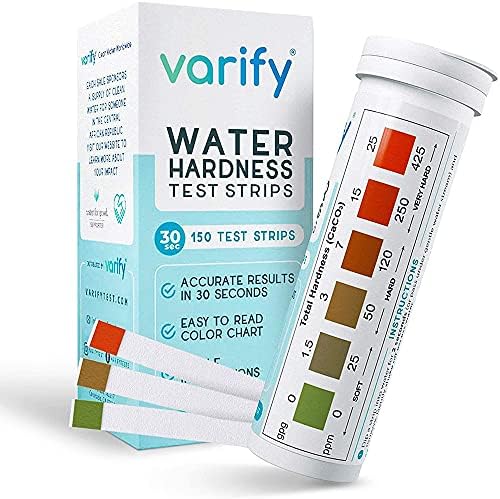
Figure: A simple DIY water hardness test kit on Amazon (No, I am not an affiliate.)


 Sawyer Mini. My current favourite portable water filter - small, superb capacity, versatile. More info

 Big Berkey water filter with 4 British Berkefeld Super Sterasyl ceramic candles My recommended residential gravity filter elements/candles. More info
 Click here for the full video of the talk.


